Memory Lane
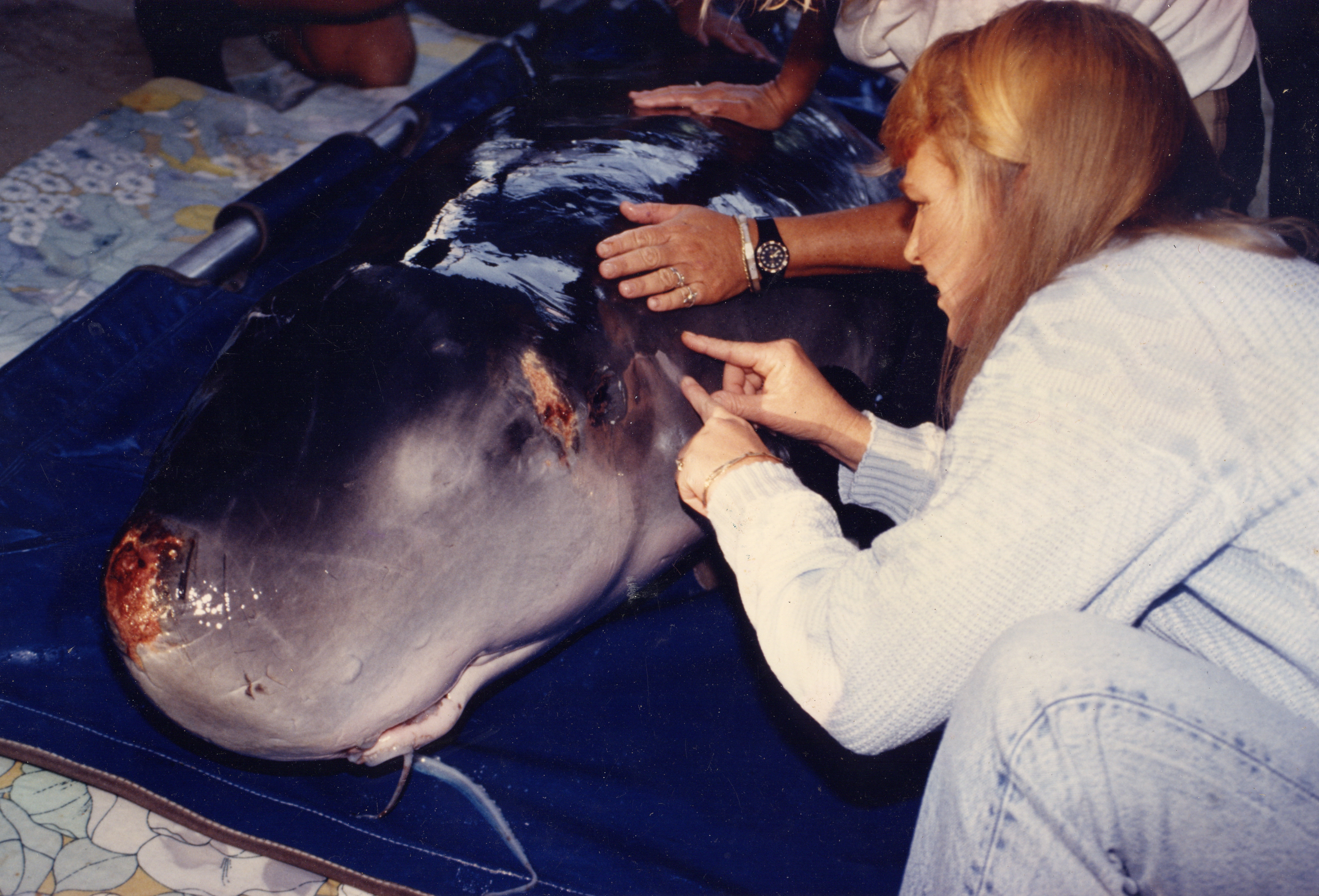
In late November 1990, a rare and fragile patient arrived under the care of Dolphin Research Center: a seven-foot, underweight pygmy sperm whale discovered stranded on the shores of Lignumvitae Key. The young whale, later named Fathom, was suffering from serious complications caused by dehydration and the strain of beaching, including liver and kidney damage, weight loss, and the breakdown of the insulating blubber that normally preserves body heat.
Pygmy sperm whales are deep-water animals and seldom seen alive near shore,and because of this, strandings of this species are unusual, and survival rates are historically low. At the time, no pygmy sperm whale had ever survived more than four months in human care, making Fathom’s case both scientifically significant and deeply urgent.
Fathom was transported to a temporary holding tank in Marathon, where Dolphin Research Center’s medical and animal care staff maintained 24-hour care. The weakened animal needed constant support: hand-fed up to 20 pounds of squid each day, hydrated by carefully measured fluids, and monitored closely.
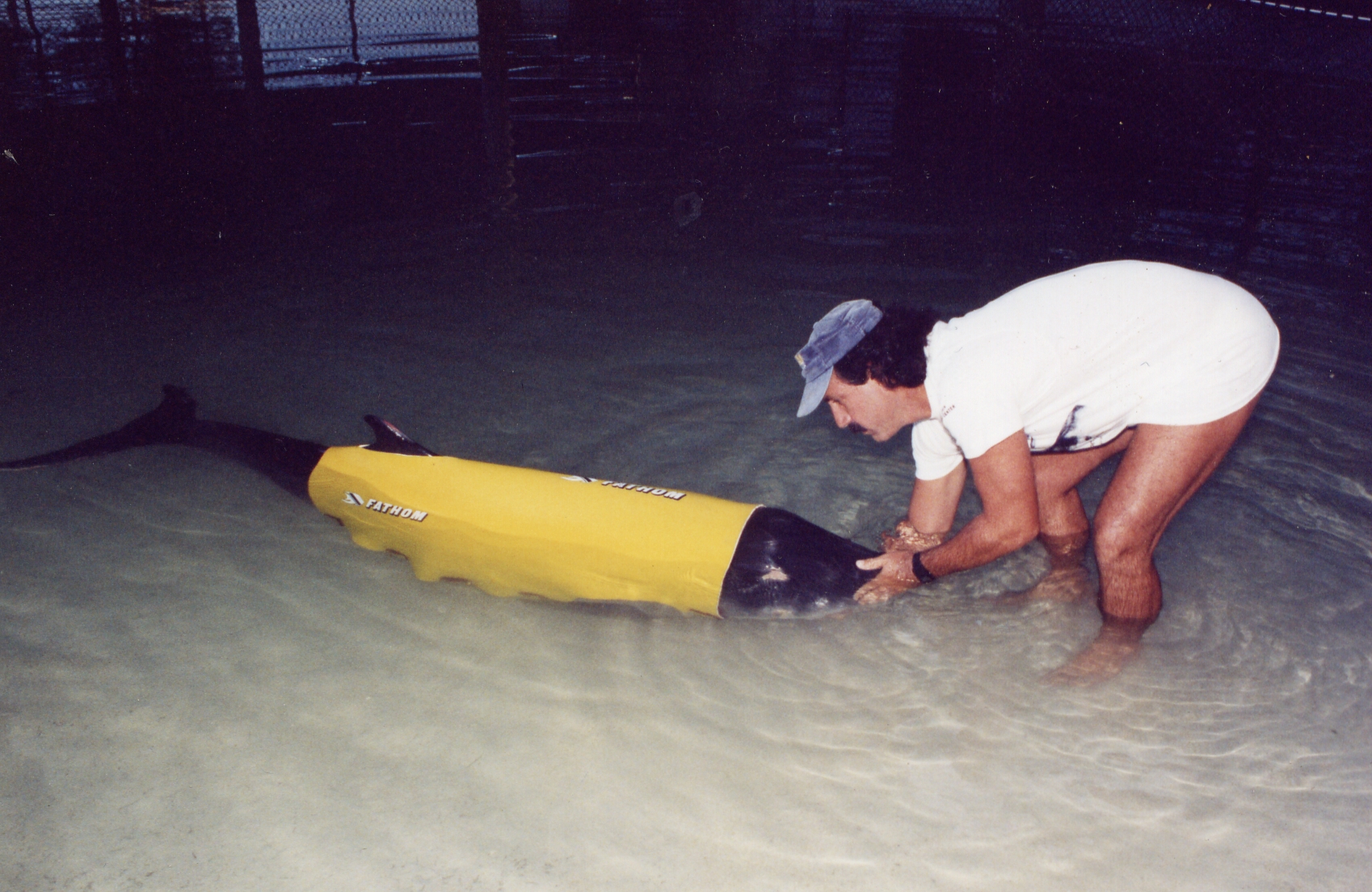
As the days went on, the team realized the whale required additional assistance to stay buoyant and conserve energy. Traditional flotation devices weren’t adequate for an animal of Fathom’s size and condition. That’s when Fathom Wetsuits, an Orlando-based wetsuit manufacturer, stepped forward with a remarkable offer.
Working closely with Dolphin Research Center staff, the company created and donated a custom yellow neoprene wetsuit. It was the first of its kind ever developed specifically for a stranded small whale. The innovative suit was designed to support the whale’s body, help retain warmth, and provide extra buoyancy during rehabilitation.
Once the wetsuit arrived in the Keys, DRC’s own Rita Irwin, now President & CEO, carefully custom-tailored the piece to ensure a proper, comfortable fit for the whale. Her modifications allowed the suit to perform exactly as needed, becoming a crucial tool in Fathom’s care.
Despite the odds, the medical team found reasons for optimism. Fathom remained alert, responsive, and aware of her surroundings. All of these were behaviors that suggested a fighting spirit even in the face of daunting statistics.
Fathom’s rescue stands as a milestone in Dolphin Research Center history as an extraordinary collaboration between dedicated caregivers, creative problem-solvers, and a generous wetsuit company inspired to help. The wetsuit designed for her became a pioneering advancement in marine mammal rescue techniques, proving that innovation and compassion can come together in powerful ways when an animal needs it most.